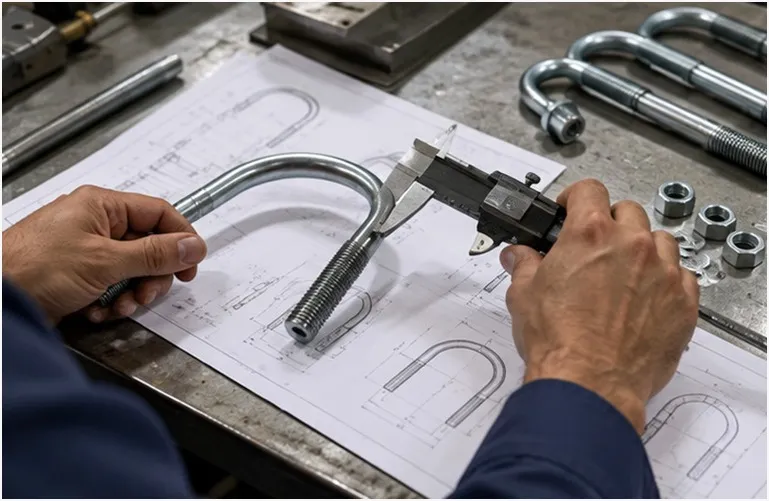
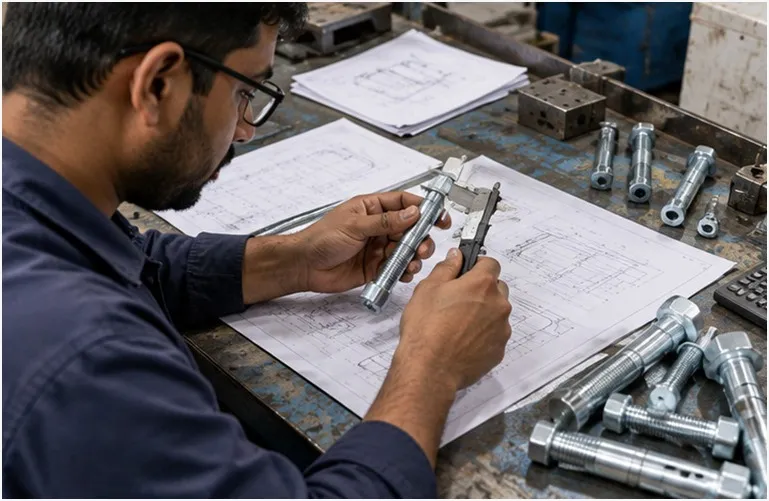
For a U.S. equipment manufacturer, a custom-fastener request rarely begins with a catalogue code. More often it begins with a PDF drawing, a target quantity and a question: Can you make this consistently? Canco Fasteners, established in 1967, supports drawing-based enquiries across fastening and project-specific metal components. The useful conversation starts with what the drawing does—and does not—say.
Step 1: Establish which drawing controls the order
A drawing should identify its revision, units, critical dimensions, material grade, mechanical requirements, thread form, finish and relevant standards. If a buyer provides three versions by email, Canco and the customer need to agree which version is released for quotation. A single revision-controlled file avoids a sample being accepted against an obsolete requirement.
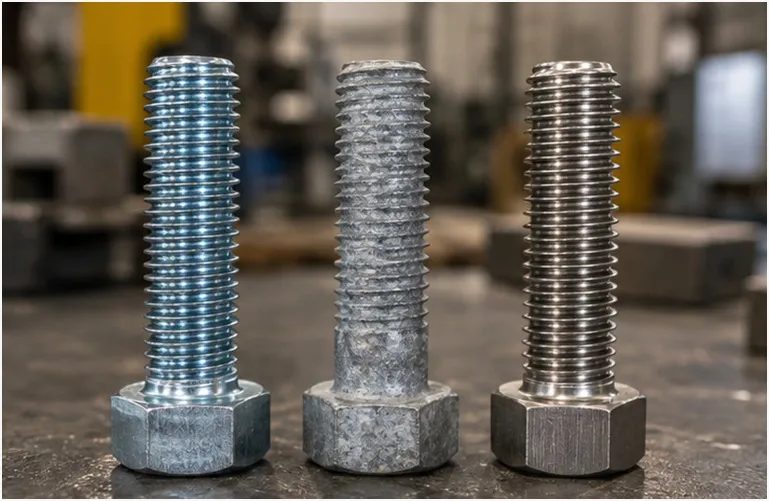
A note reading “zinc plated” may still be incomplete. What plating specification, thickness, passivation and appearance criteria apply? Likewise, “high tensile” is not a substitute for a property class or mechanical specification. These are purchasing questions, not minor paperwork details.
Step 2: Review feasibility before discussing a unit price
The route for a forged bolt is different from that for a wire-bent part or a machined specialty component. Tooling, forming limits, tolerances, heat treatment and coating may affect feasibility and economics. Canco advertises cold forming, threading, machining, assembly and coordinated finishing through approved partners; the actual route must be confirmed for each drawing.
For buyers, the useful outcome is a quotation that clearly states assumptions: material, process, tolerances, samples, tooling charges if any, batch quantity, packaging and delivery term. A low price built on an unapproved substitution is not a bargain.
Step 3: Define a first-article acceptance plan
Before repeat production, agree which dimensions and characteristics must be checked on samples. A first-article inspection can include actual measurements against each specified characteristic, thread-gauge acceptance, coating requirements and fit checks where relevant. The approval should refer to the same drawing revision as the purchase order.
Do not confuse a visually attractive sample with engineering approval. If a fastener is used in a load-bearing assembly, the responsible engineer must separately evaluate applicable mechanical and application requirements.
Step 4: Carry approval into subsequent batches
One approved sample does not automatically protect future deliveries. Buyers should state when additional first-article approval is required—for example, after a design change, tooling change, material substitution or a significant process change. Lot identification and defined inspection records make repeat purchasing more manageable.
What to send Canco with your enquiry
Provide the latest drawing, expected order and annual demand, operating environment, material grade, thread designation, finish, packaging, destination and any approval template. If a feature is critical to fit or safety, flag it explicitly.
Talk to Canco: Submit the drawing through the Canco contact form (https://www.cancofasteners.com/contact) or email info@cancofasteners.com. See the company's declared production scope (https://www.cancofasteners.com/capabilities) before setting expectations for a particular part.
Quick buyer questions
Can a photo replace a drawing? It can help communicate geometry, but it is not a reliable basis for tolerances or production release.
Does Canco make every custom part in-house? Canco describes both factory work and qualified manufacturing partners. Confirm the process route during feasibility review.
When should tooling be purchased? After the geometry, anticipated volume, approval criteria and commercial responsibilities are agreed.