U-bolts are often treated as simple bent rods. For an equipment manufacturer, however, a few millimeters in internal width, leg length or thread position can determine whether the assembly fits. Canco Fasteners handles custom fastening enquiries, including made-to-drawing formed components within confirmed process capability.
For U.S. OEM buyers, the fastest route to a meaningful quotation is a drawing that separates functional dimensions from preferences.
Start with the rod and the bend geometry
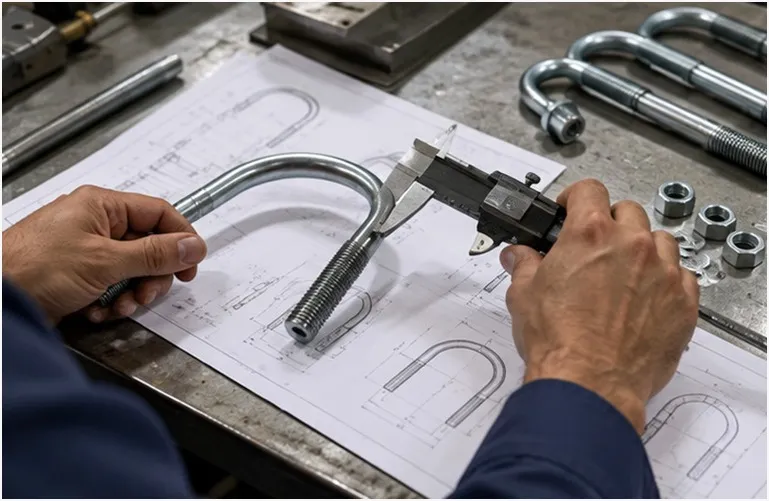
Identify nominal rod diameter, specified tolerance, inside width or center-to-center dimension, inside bend radius and leg lengths. Make clear where each measurement starts and ends. If one leg is longer than the other, show that explicitly rather than assuming symmetry.
Bending changes material geometry; the exact relationship between inside width, radius and final leg length depends on the forming method. A photograph alone cannot define this accurately.
Define the thread on each leg
Specify metric or UNC/UNF thread, diameter, pitch or TPI, class where required, thread length and whether the end needs chamfering. Confirm compatible nuts and washers if they are supplied as an assembly. Threading may be completed before or after bending depending on the approved process plan; the final requirements still apply.
For threaded sections near the bend, ask whether there is sufficient straight length for tooling and assembly.
State material, grade and finish
A U-bolt for a light pipe support does not necessarily require the same material, mechanical characteristics or finish as a marine assembly or structural connection. The buyer should choose grade and corrosion protection based on the engineering application. Zinc plating, hot-dip galvanizing and stainless steel are not freely interchangeable.
Coating thickness can influence thread fit and the final dimensions of the part. Any critical assembled fit should be checked after finishing.
Explain what the U-bolt clamps
If possible, supply a section drawing showing pipe outside diameter, bracket thickness, nut/washer stack and available installation clearance. That context helps identify dimensional conflicts before sample production. It does not replace the buyer's engineering validation of loads and suitability.
Build an approval plan
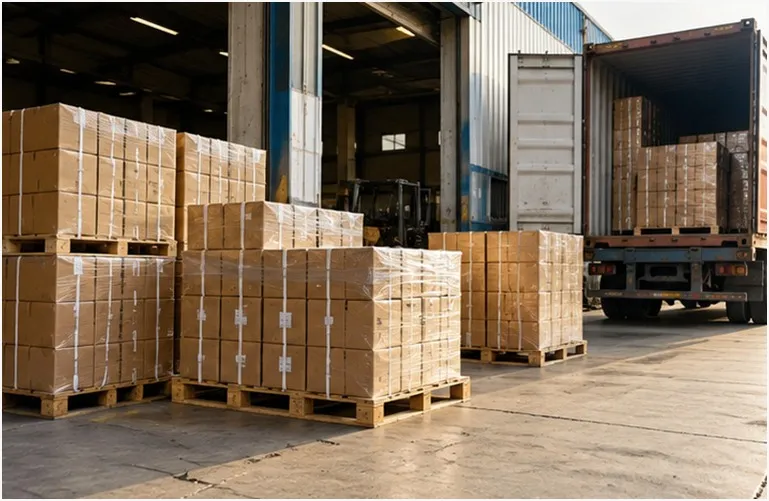
Ask for sample dimensions covering rod diameter, internal width, outside height, leg length, thread engagement and finish. State which values are critical to assembly. Agree on packing orientation so long threaded legs are not damaged in transit.
Canco can assess feasibility when these requirements are provided; do not assume a specific bend radius or grade is available without a technical review.
Request custom U-bolts: Submit your drawing to Canco (https://www.cancofasteners.com/contact) and refer to OEM manufacturing (https://www.cancofasteners.com/industrial-manufacturing).
Quick buyer questions
Is pipe nominal size the same as actual outside diameter? Not necessarily; specify the actual fit requirement.
Can zinc-coated dimensions differ from unfinished dimensions? Yes; identify the inspection stage.
Does one good sample guarantee production consistency? No; define repeat-batch controls.