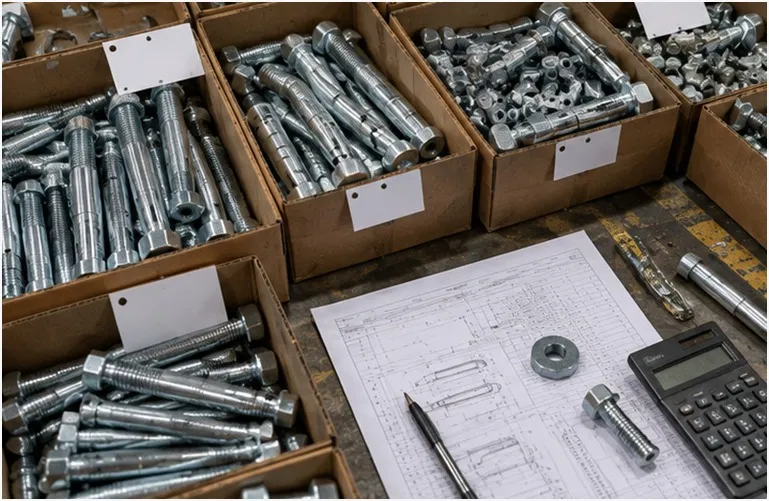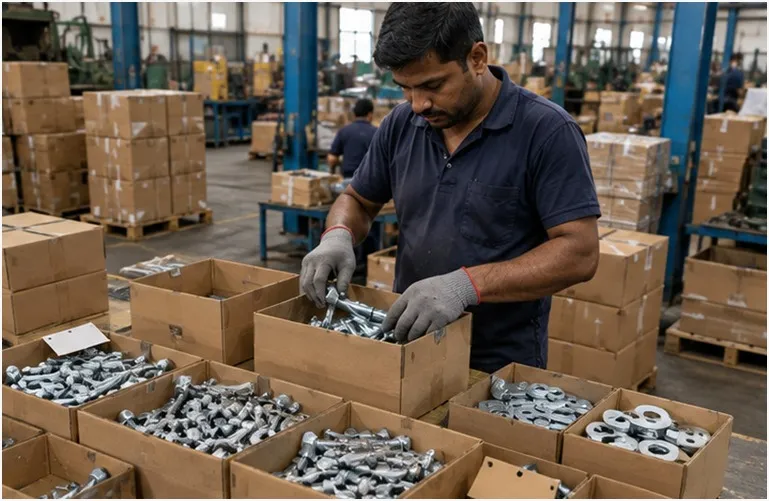

A buyer requests “full certificates” for an incoming shipment. The supplier sends a material document and a photograph of finished bolts. A receiving inspector then asks a practical question: which record actually shows that this lot meets the purchase order? The solution is to specify the document pack before production, not after goods have shipped.
Canco Fasteners describes incoming material checks, in-process controls, dimensional inspection and batch traceability in its published quality materials. Buyers should still confirm the exact records provided for the particular order.
First, identify the product and lot
The inspection file needs an unambiguous reference to the customer part number, Canco item description, drawing revision or standard, purchase order, lot identifier and quantity. If one shipment contains several lots, the documents should identify which results apply to each one.
Without this link, even an accurate laboratory result may be difficult to associate with the delivered product.
Understand the different document types
A material test certificate typically addresses the specified material and applicable test results. A dimensional inspection report records actual measurements against the product drawing. A coating report addresses the agreed finish characteristics. A mechanical test report covers defined test methods and results when those tests are applicable and required.
These documents answer different questions. An MTC alone does not prove an anchor's allowable load in concrete. Nor does an attractive photograph demonstrate that a thread passed its specified gauge.
Define measurement points before production
A practical inspection plan starts with the features that affect function: thread size and fit, critical diameters, length, bend geometry, mating features and surface condition. Specify tolerances, sample quantities and acceptance criteria in the purchase documentation.
For custom parts, a first-article inspection may document each relevant drawing characteristic; routine production inspection can follow an agreed sampling plan.
Clarify who performed testing
Some tests may be conducted by the manufacturer; others may require an independent or accredited laboratory, depending on the contract and method. Ask Canco to identify the testing entity and report number when relevant. Do not assume that all advertised test methods are performed in-house.
Also confirm the currency and scope of any certificate referenced. A quality-system certificate does not substitute for product-specific evaluation or application approval.
Prepare the U.S. receiving checklist
The importer should compare the packing list, lot codes, received quantities and inspection file. Establish how discrepancies are reported and who can authorize acceptance of a deviation. Preserve records for the period required by the contract or applicable regulation.
Discuss documentation requirements: Canco quality information (https://www.cancofasteners.com/quality-certifications) and contact the quality/sales team (https://www.cancofasteners.com/contact).
Quick buyer questions
Do I need EN 10204 3.1 for every SKU? Only where specified and applicable; state the required document during RFQ.
Does a test report equal a U.S. code approval? Not automatically; application approvals require their own evaluation.
Can two lots share one report? Only where the report and contractual traceability rules legitimately cover them.